

How to Revive Dead Grass in Palm Beach, Florida
Key Actions to Take for Lawns That Are Dead or Dormant
It’s easy to panic when your lawn goes from lush green to brown. It looks like dead grass, which is enough to scare any Florida homeowner. Should you just tear everything out and replace it with rocks and mulch?
Before you make any hasty decisions, let’s figure out what’s actually happening with your turf. Keep reading to understand the distinction between dead grass and dormant grass. Plus, get expert advice from the professionals at Island Environmental!
A Deep Dive on Dormancy
During Florida’s winter months, your lawn might enter dormancy. But relax! It’s not dead…it’s just in a state similar to hibernation. Warm-season varieties (Bermuda, Zoysia, Bahia, and St. Augustine) can stop their growth and turn brown. This happens because the sun isn’t shining as intensely and the cooler weather impacts growth patterns.
What causes this? The primary reason is that photosynthesis becomes more challenging during winter. However, Mother Nature keeps working underground. The soil undergoes rejuvenation through decomposition and nutrient recycling, slowly releasing the nutrients that will fuel your lawn’s spring revival.
When seasons change, energy reserves stored in the roots and crown begin activating. The crown is where the grass’s root system connects with its shoots. As temperatures rise, your lawn starts to “wake up.” Before long, it’ll be growing again with that vibrant green color returning.
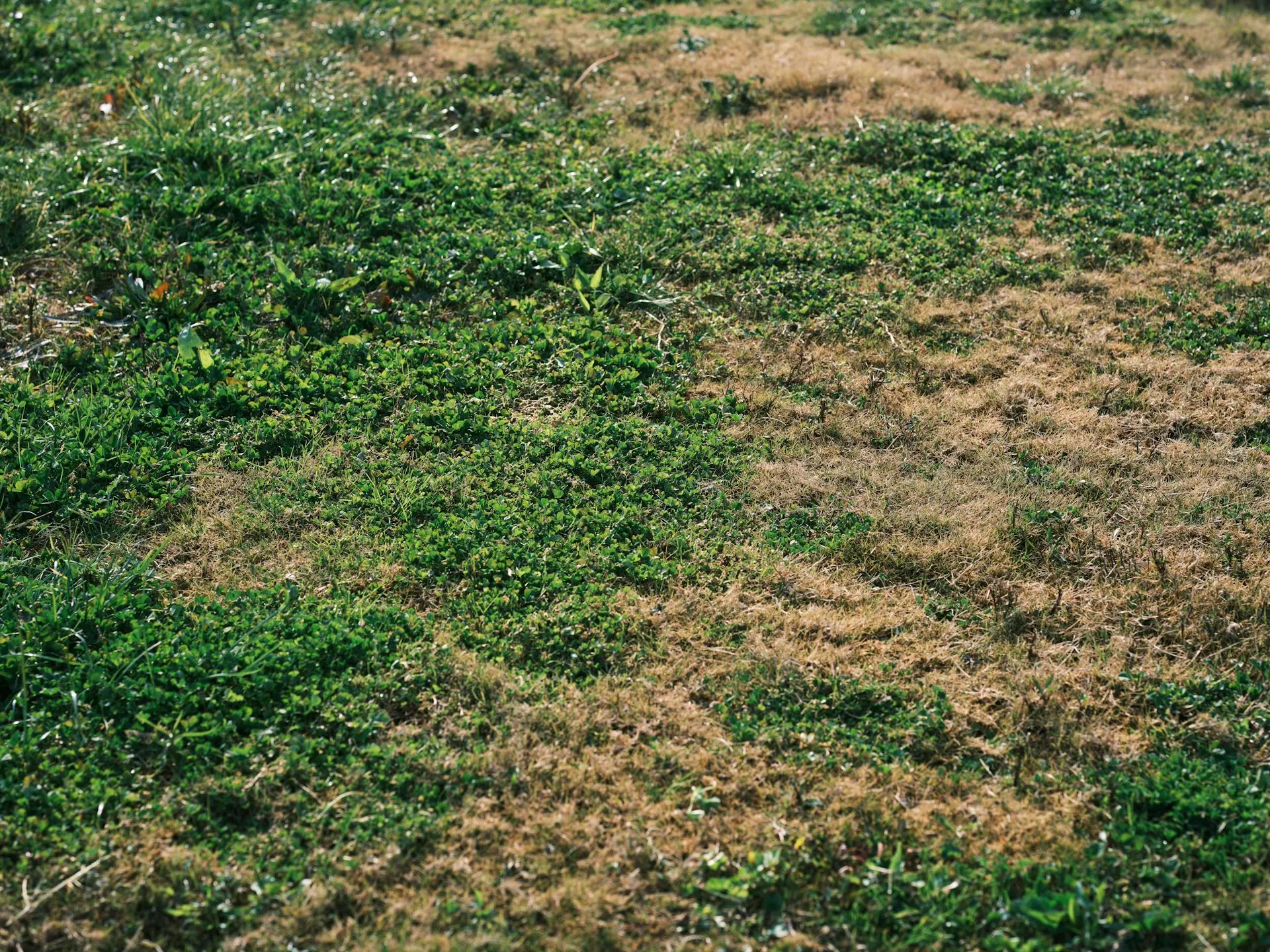
How to Tell Dormant Grass Apart From Dead Grass
Dormancy isn’t necessarily bad. Think of it like the grass is simply hibernating. It hasn’t died. It’s just preserving energy for more favorable conditions ahead. On the flip side, when your lawn is genuinely dead, the roots and crown have completely failed.
So how can you determine what’s happening? Get down on one knee and separate those brown blades to examine what’s occurring at the base. If you can still see a trace of green near the crown (where your grass’s root system meets its shoots), then it’s dormant.
Another technique to attempt is the tug test. Grasp a handful of your grass and give it a gentle pull. Dormant grass will remain anchored because its root system is still fine. Dead grass won’t offer resistance when you pull. It’ll lift up easily.
If your brown lawn shows uniform tan or straw coloring, with all the blades standing up straight, it’s likely just dormant. But if the coloring is splotchy, it appears mushy or smells bad, then you’ve got more serious issues on your hands.
Seasonal Dormancy Differences
If it gets cold enough, warm-season lawns in Florida can turn brown during winter and recover in spring. They maintain their green color throughout summer, while cool-season grasses enter dormancy during extreme heat.
Without sufficient water, cool-season lawns, like fescue or bluegrass, go dormant during summer. They’ll be brown throughout July and August, enduring the hot, dry months until September when temperatures decline.
Your location influences the grass type you have, too. In North Carolina’s transition zone, warm-season grass might enter dormancy once nighttime temperatures drop below 50°F in late fall. In the South, these same varieties may not go dormant until December.
Reasons for Brown or Dead Grass?
Brown grass that’s genuinely dead represents a real challenge. You must identify what caused the death before trying any fixes.
Mowing too low. Cutting more than one-third of the blade length at once shocks the plant. The grass can’t generate sufficient food, roots remain near the surface, and stress welcomes disease or drought damage.
Thatch. This is the spongy layer of dead roots and stems positioned between the green blades and soil. When it build up past half an inch, water flows off the surface and disease organisms thrive in the mat.
Insects. Grubs consume roots and destroy grass from beneath, with damage only becoming visible after significant root system loss. Crane fly larvae, billbugs and chinch bugs inflict similar damage depending on location and grass variety.
Soil pH. When pH shifts considerably from neutral, grass cannot absorb nutrients. Most lawns require a range between 6.0 and 7.0. Beyond that range the grass gradually weakens.
Lawn diseases and fungi. These frequently appear as irregular brown zones. Brown patch fungus creates large dead circles. Dollar spot produces small circular dead patches. Red thread initially gives a pink tint then the grass becomes tan.
Lawn care timing. Planting seed or applying products during the wrong season stresses turf and can kill extensive sections.
Watering mistakes. If you provide insufficient water, the grass becomes stressed, roots contract and eventually the plant perishes. Excessive water is equally damaging. Roots suffocate without oxygen and rot and fungi develop. Inconsistent sprinkler coverage also leaves certain areas parched.
Compacted soil. Heavy clay soil, constant foot traffic or years without aeration make the ground hard. Roots can’t expand, water can’t penetrate, and air can’t circulate. The lawn slowly deteriorates.
Dog urine. It creates brown centers surrounded by bright green. The concentrated nitrogen scorches the middle while nourishing the border. Dog owners will see this quite a bit.
Lawn Revival Tips by Region & Season
Your location changes everything. What succeeds up north can fail miserably in Florida.
Southern Warm-Season Lawns
Spring represents your primary window for recovery. Late April through June is optimal timing for Bermuda, Zoysia, St. Augustine, and Bahia.
Late summer or early fall is when you prepare your lawn for the following year. That’s the period for a final fertilizer application, eliminating any persistent weeds, and establishing conditions so your grass can enter dormancy and rebound vigorously in spring.
Northern Cool-Season Lawns
Ideal times to revive your lawn in the Midwest? Early spring (late March through May) and early fall (late August through October). Fall’s actually your best opportunity since you bypass summer stress immediately after the grass emerges.
Following a difficult summer, overseeding in fall thickens sparse areas and allows you to plant newer, tougher grass varieties. Your soil will likely need a nitrogen supplement after winter because much of it washes away or becomes unavailable in cold weather.
During spring, monitor for fungal problems like snow mold. You’ll spot gray, matted patches after snow disappears. Rake them out and, if necessary, treat them with fungicide to prevent spreading.
Steps to Revive a Dead Lawn
- Determine What’s Wrong With Your Lawn
First things first. Test your soil. It’ll reveal if your lawn’s pH is incorrect, what nutrients are lacking, and how much organic content is present. Then, verify if water is accumulating anywhere after heavy rainfall. That’s a warning sign.
Next, extract some grass patches and inspect the roots. Brown and waterlogged? If the roots are shallow and dying, you’ve probably got a soil or irrigation problem. If they’re deep and robust, the issue’s elsewhere.
- Prepare Your Lawn
Eliminate the weeds first. Then mow it down to approximately 1-2 inches (low enough so new seeds actually contact soil instead of just resting on dead grass).
Rake up all the debris like leaves and twigs. If the thatch layer’s thicker than half an inch, remove it.
Final step? Aerate. Essentially, create holes in your lawn so it can breathe. Makes it simpler for water and nutrients to penetrate.
- Revive Your Turf
Grass seeds on compacted dirt? They’ll dehydrate before they even germinate. And if you omit fertilizer, any new grass that does emerge will struggle.
Timing’s crucial. Cool-season grass thrives in early fall but spring is the alternative. Soil is still warm enough (50-65°F) for seeds to germinate then. Warm-season grass? Late spring or early summer, when the ground is warm and comfortable (65-70°F).
After distributing the seed, rake it gently. Some homeowners even apply a thin compost or topsoil layer on top to assist.
- Water Like a Pro
Maintain damp soil (not saturated) for 2-3 weeks. That typically means daily watering. Perhaps twice if it’s scorching or windy. Just ensure the top inch feels slightly moist when you test it.
Once the grass reaches 1-2 inches (a few weeks later), transition to deeper, less frequent watering. Encourages roots to develop downward strongly.
By weeks 4-6, you can ease up a bit. Just provide 2 inches of water weekly, divided into one or two substantial waterings instead of frequent light sprinklings.
- Maintain It
Mow regularly, but don’t scalp it. Never remove more than a third of the grass height at once. And continue watering, even after the new growth looks healthy.
Oh, and nourish it! Regular fertilizer helps keep grass thick and green.
Dead Grass FAQs for Florida
-
How long can grass survive without water?
It varies. Cool-season grasses can endure 2 to 4 weeks before experiencing real damage. Warm-season types like Bermuda can persist for 3 to 6 weeks in dormancy, but beyond that, they may perish without rainfall.
-
Will fertilizer revive dead grass?
No, fertilizer only benefits living plants.
-
Can brown grass turn green again?
If it’s merely dormant, definitely. If it’s genuinely dead, it won’t recover. Perform the pull test and examine the plant’s base for green.
-
Can you reseed directly over dead grass?
You can, but it seldom succeeds well. Dead grass prevents seeds from contacting soil, shades emerging sprouts, and can harbor disease.
-
Should you mow dead grass?
Yes, particularly if you’re adding new seed. Cutting it short helps you identify bare areas and gives new seeds better contact with soil.
-
What if only certain patches are dead?
Just repair those areas. No need to redo your entire yard. Identify what killed those zones, address the problem, prep the soil, and reseed. Use the identical grass type for optimal results.
Get a Healthy Florida Lawn With Pro Help
If you don’t want to spend your free time (and energy) handling every little lawn care detail, contact your local pest control experts at Island Environmental. We proudly serve the greater Palm Beach area, ensuring high-quality lawn care and pest control services for these communities: