

Spotlight on Florida Pests: Most Common Types of Mosquitoes
Which Kinds Are Dangerous & How Can You Identify Them?
That relentless whining sound and those maddening red bumps materializing on your arms can completely destroy what should've been a relaxing night outdoors. Here's the crucial thing you need to grasp: various mosquito species present wildly different threat levels.
Some varieties pose legitimate health dangers. Others? They're basically harmless and won't do anything except annoy the living daylights out of you. Let the mosquito control experts at Island Environmental walk you through differentiating between mosquito types and recognizing which ones represent the most serious hazards to you and your family.
Diseases Carried by Some Mosquitoes
Before we dive into the specific mosquito types, let's look at what diseases they can carry. Understanding these risks helps you appreciate why proper mosquito control matters so much:
Yellow Fever: Mainly a travel-related worry, though Aedes aegypti populations do exist in the U.S.
Malaria: Rare within U.S. borders but remains possible through local Anopheles mosquito transmission
West Nile Virus: The most widespread mosquito-borne illness in America, mainly transmitted by Culex species
Zika: Regional outbreaks that pop up sporadically, primarily spread by Aedes aegypti and Aedes albopictus varieties
Dengue: Another Aedes-carried disease, with occasional outbreaks in southern states
Chikungunya: Less common but still concerning, also transmitted by Aedes mosquitoes
How Many Mosquito Species Exist?
Around the world, over 3,000 different mosquito varieties are buzzing around. About 200 of these species have established themselves across the United States. The good news? Only a tiny percentage can actually spread diseases to humans.
Professionals categorize these winged pests into four main groups: Culex, Aedes, Anopheles, and Culiseta. Each of these mosquito families displays dramatically different characteristics. They're active during different times of day, pursue different victims, choose different breeding locations, and occupy different geographic areas.
Actually, many mosquitoes couldn't care less about biting people. They'd much rather feed on birds or other animals. And believe it or not, some species don't even bite at all!
Aedes Mosquitoes
These insects have become exceptionally well-adapted for cohabiting with human populations. Breaking from standard mosquito behavior, they're aggressive daytime feeders.
When your afternoon yard work gets derailed, Aedes mosquitoes are likely the culprits. What makes the situation even worse is their strong preference for feeding on humans rather than animals. They basically specialize in pestering people.
Yellow Fever Mosquito
- Breeds in man-made water containers and urban settings (discarded tires, flower pots, forgotten buckets, birdbaths, anything holding water)
- Thrives during warm, humid months, which in Florida means most of the year
- Found predominantly in Southeast and Southwest U.S., Mid-Atlantic regions, and parts of California
- Infamous for spreading Zika virus, Dengue fever, Chikungunya, and Yellow Fever
Asian Tiger Mosquito
- Persistent, aggressive feeding patterns throughout daytime hours
- Not originally from North America but can withstand cooler weather, allowing spread across Southeast, Midwest, Northeast, and Pacific areas
- Identified by characteristic black-and-white striped markings that make them easy to spot
- Creates breeding areas in old tires, assorted containers, and shady spots around your property
Eastern Saltmarsh Mosquito
- Extremely aggressive biter that attacks during both daylight and darkness
- Can fly up to 40 miles from where they hatched
- Typically doesn't transmit serious diseases
- Reproduces in salt marsh habitats and coastal wetlands along Atlantic and Gulf shores
Culex Mosquitoes
This particular group becomes predominantly active from dusk through dawn. These are the indoor nuisances we run into most often, typically establishing breeding colonies in stagnant or contaminated water. That includes drainage systems, clogged gutters, or forgotten pools that haven't been maintained.
Throughout the United States, Culex mosquitoes are recognized as the primary vectors for West Nile virus transmission to people.
Southern House Mosquito
- Found throughout Southern U.S. regions
- Known for transmitting West Nile virus, St. Louis encephalitis, and canine heartworm
- Favors breeding in nutrient-rich stagnant water
Northern House Mosquito
- Takes advantage of man-made structures, laying enormous quantities of eggs in sewage systems, retention basins, storm-water catchments, ground pools, and wastewater holders
- Hibernates both inside buildings (basement spaces, crawl areas, attic sections) and outside (in animal burrows, underground passages, decaying wood)
- Thrives in urban and suburban locations, particularly in warm, tropical-style climates
Western Encephalitis Mosquito
- Delivers a significantly more painful bite than similar species
- Can reproduce at elevations reaching 10,000 feet, posing problems even in mountainous communities
- Lives in Midwest and Western states
Culiseta Mosquitoes
Florida property owners shouldn't lose much sleep over this category since they're concentrated primarily in colder climates. Plus, these mosquitoes pose very low health threats to people.
Key Traits of Culiseta Mosquitoes
- Located mainly in Northern U.S. states, high-altitude locations, and across Canada
- Prefer cooler temperatures and usually appear in early spring or fall when competing species are less active
- Breed in snowmelt pools, woodland water bodies, and cold standing water
Anopheles Mosquitoes
Worldwide, roughly 450 species make up this group of nighttime feeders. They hold a unique distinction as the sole mosquito type capable of transmitting malaria to humans. While malaria isn't common in the U.S. anymore, these mosquitoes are still worth knowing about.
Common Malaria Mosquito
- Historically, this variety was responsible for malaria spreading throughout the U.S. before control programs eliminated it
- Establishes breeding sites in vegetated freshwater locations (ponds, swamps, marshlands, slow-flowing waterways)
- Located primarily in Eastern, Midwestern, and Southeastern states
When Should Mosquitoes Concern You?
Seeing them regularly and getting bitten frequently? That's a clear sign you need professional pest control services.
Persistent swarms can quickly destroy any outdoor gathering or make your backyard essentially unusable. However, several warning signs can escalate what seems like a minor annoyance into a significant health threat requiring immediate preventive action:
Public Health Alerts: Stay informed about local health department announcements regarding West Nile virus or similar disease outbreaks in your area.
Standing Water: Any pooled water on your property, from clogged gutters to forgotten plant saucers, directly contributes to exploding mosquito populations.
Weather Conditions: Hot, humid weather (like Florida summers) extends breeding seasons and dramatically accelerates mosquito reproduction rates.
Recent Travel: Extra vigilance becomes essential when household members have traveled to regions with active mosquito-transmitted disease spread, particularly tropical destinations.
How to Tell Mosquito Species Apart
Mistaking harmless insects like crane flies for mosquitoes happens surprisingly often. Professionals use a specific technique called the "Three P's" for accurate identification.
While you probably won't be examining mosquitoes this closely, understanding these differences helps you appreciate what pest control experts look for.
Three Easy Methods for Identifying Common Mosquitoes
Pattern. Check out the insect's coloring and markings. Black-and-white striped patterns, particularly on the legs, typically signal Aedes species like the Asian Tiger Mosquito. More uniform coloring, such as brown or grayish tones, likely means you're looking at a Culex or Anopheles mosquito.
Palps. These sensory appendages are located near the mosquito's mouth area. On Anopheles mosquitoes, palps are long and prominent, approximately matching the proboscis length. Aedes and Culex mosquitoes have much shorter palps that are barely noticeable.
Posture. This offers one of the simplest identification techniques. When Anopheles mosquitoes land and rest, they hold their bodies in a straight alignment with their abdomen angled upward. Almost like they're doing a headstand. In contrast, Aedes and Culex mosquitoes adopt a hunched "V" shape while resting, with their bodies parallel to the surface.
Which Mosquitoes Target Humans?
Contrary to popular belief, only female mosquitoes actually bite. Males are completely harmless, living entirely on flower nectar and plant juices. Females, however, require a blood meal to obtain the proteins essential for egg production. It's not personal; it's just biology.
These female hunters actively pursue warm-blooded creatures, mainly targeting birds and mammals, though some specialized species feed on reptiles or even amphibians. Their hunting process begins when they detect carbon dioxide released by potential hosts from remarkable distances, sometimes up to 100 feet away.
Following this chemical signal upwind, they then rely on additional cues including visual indicators, subtle humidity changes, and distinctive body odors to zero in on their target with surprising accuracy.
Most mosquito varieties maintain preferred feeding schedules, typically during dawn or twilight periods when temperatures are cooler and humidity is higher. However, they'll sometimes bite during warm, overcast daytime hours, especially aggressive species like Aedes mosquitoes.
Best Strategies for Mosquito Management
Successful mosquito prevention and control requires multiple coordinated strategies working together. Think of it like a multi-layered defense system. Each component reinforces the others.
Deploy Focused Treatments
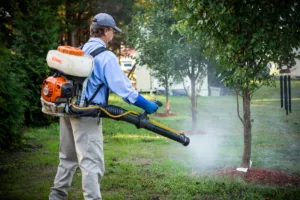
When habitat modifications and preventive measures prove inadequate, careful application of larvicides or adulticides might become necessary. For optimal safety and maximum effectiveness, trained professionals should handle these chemical applications to ensure proper methods, correct dosages, and thorough coverage. DIY treatments often miss critical breeding sites or use incorrect application techniques.
Identify Your Adversary
Target your control efforts by understanding which local species you're dealing with. Culex varieties frequently breed in organically enriched water found in storm drains or neglected pools. Aedes types generally exploit man-made containers holding clean water (plant saucers, forgotten toys, etc.). Meanwhile, Anopheles mosquitoes favor vegetated freshwater margins like pond edges or marsh areas. Knowing your enemy helps you focus your efforts where they'll have maximum impact.
Remove Breeding Habitats
Your most powerful weapon involves eliminating locations where mosquitoes deposit their eggs. Consistently empty any accumulated water at least once weekly. Mosquitoes can complete their life cycle in as little as seven days.
Monitor clogged gutters, plant trays, children's toys, pet water bowls, and even tiny containers like bottle caps, which can retain sufficient water for larval growth. It's amazing how little water mosquitoes actually need to reproduce.
Implement Personal Defense Measures
Reduce your exposure by wearing long, loose-fitting garments and applying EPA-registered insect repellents containing DEET, picaridin, or oil of lemon eucalyptus.
Scheduling outdoor activities to avoid dawn and dusk hours (when most mosquitoes are most active) can also dramatically decrease your bite count. Light-colored clothing also helps, as mosquitoes are more attracted to dark colors.
Recognize Seasonal Trends
Mosquito activity peaks during hot summer months in most regions but can persist year-round in southern climates like Florida's. In fact, Florida's warm, humid environment means mosquito season barely takes a break. Synchronize your prevention tactics with these active periods for best results, though in Florida, that essentially means year-round vigilance.
Eliminate the Mosquitoes From Your Property!
The most effective mosquito control programs use methods customized to the particular species infesting your property. They integrate three essential strategies: treating water sources with larvicides to stop mosquitoes before they can fly, actively reducing adult populations through targeted treatments, and modifying environments to eliminate breeding habitats permanently.
Modern, sophisticated control systems go even further by targeting the reproductive cycle itself, using methods that prevent new generations from emerging and establishing long-lasting mosquito population reductions. This approach creates sustained results rather than just temporary relief.
Ready to safeguard your home, lawn, or business? Contact Island Environmental today! We proudly serve the greater West Palm Beach area, ensuring high-quality lawn care and pest control services for these communities: