
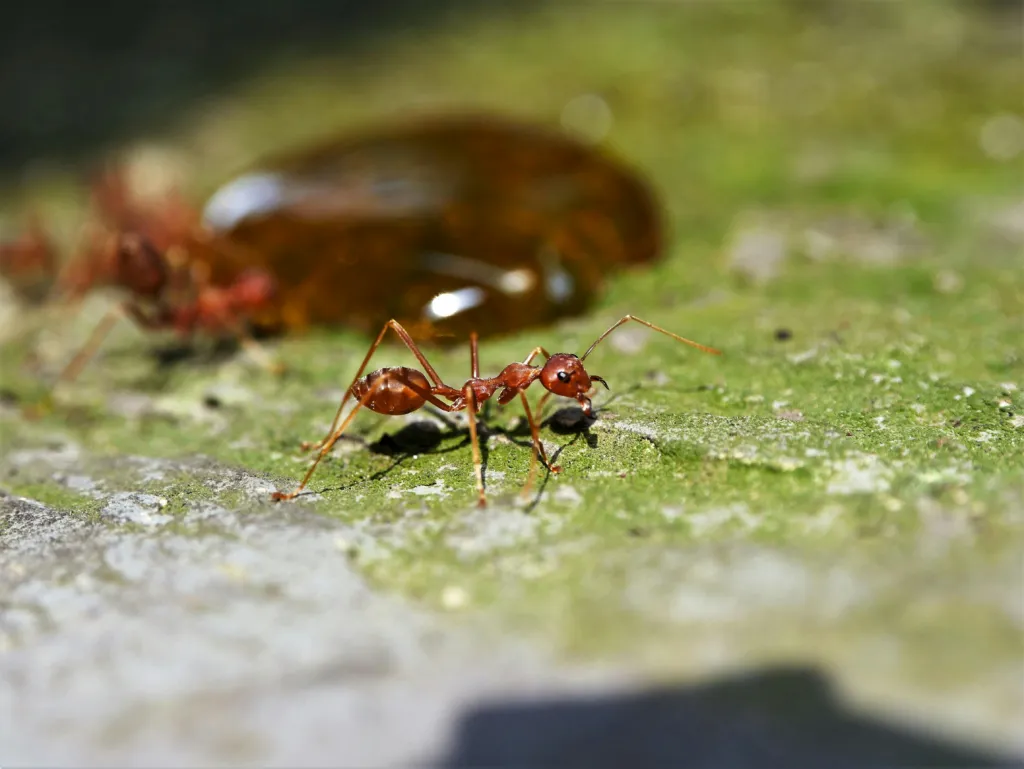
The Different Types of Ants You May See in Florida
Which Ant Species Are Most Likely to Invade Your Home?
You’ve invested in a beautiful home. The finishes are flawless. The landscaping is immaculate. So for Palm Beach homeowners, even one ant indoors is too many. And that one ant is never alone.
At Island Environmental, we serve some of Florida’s most discerning homeowners. Below, we’ve outlined the types of ants most likely to threaten your home and how professional protection keeps them outside, where they belong.
What Ant Activity Might Indicate
Ants don’t show up randomly. Their behavior tells you exactly what’s happening on your property.
A single ant wandering alone. That’s a scout. It’s searching for food or water. If it finds something, it will leave a chemical trail and return with hundreds more within hours.
A line of ants. Ant activity inside the home often points to hidden moisture, structural vulnerabilities, or exterior nesting sites that require professional attention before the problem expands.
Ants appearing in multiple rooms. This suggests either multiple entry points around your foundation, a nest actually located inside your walls, or a moisture problem drawing them deeper into your home.
Winged ants near windows or lights. These are reproductives preparing to leave the nest and start new colonies elsewhere. Seeing them indoors means you already have a mature colony somewhere inside your structure.
Mounds suddenly appearing in your lawn after rain. Fire ants float. Heavy rain floods their underground tunnels, so they build new mounds higher up.
Ants showing up only at night. Some species, like carpenter ants, are primarily nocturnal. If you’re only seeing them after dark, you may have a larger infestation than daytime sightings suggest.
Each of these patterns points to a different underlying issue. Recognizing what you’re seeing isn’t about becoming an expert. It’s about knowing when to call one.

South Florida’s Seasonal Ant Pressure
In our local climate, ant pressure never really takes a season off. It’s a year-round reality for homeowners.
Expansive landscaping, outdoor kitchens, and waterfront properties create the perfect conditions for multiple species to thrive. After all, there’s plenty of food, moisture, and hiding spots for ants.
That’s why what might be a minor nuisance elsewhere can quickly become a full-blown infestation here, requiring ongoing professional attention rather than a one-time fix.
To get more specific, spring and fall are peak seasons. That’s when you’ll notice the most activity around your property. Autumn is when ants start thinking about moving indoors due to dropping temperatures and dwindling outdoor food sources.
Winter doesn’t offer much relief either. Colonies that establish themselves near indoor heat sources can remain active through the coldest months.
Key Details on Common Types of Ants in the U.S.
North America is home to thousands of ant species. Fortunately, only a handful regularly invade residential properties in our area. Here’s what you need to know about each one.
Fire Ants
What they look like: Workers vary in size within the same colony. The real giveaway is the mound that’s raised, dome-shaped, with no visible opening on top. You’ll find them in lawns, along driveways, and throughout Florida.
Why they’re a problem: Fire ants sting repeatedly. Their alkaloid venom causes a burning sensation and raised welts. A single colony can hold up to 250,000 workers. For guests with allergies, a mass attack is a genuine medical emergency. On a luxury property, that’s simply not acceptable.
Where they nest: Sunny, open areas of your lawn. Mounds can appear seemingly overnight.
Twig Ants
What they look like: Long and lean, often patterned in orange and black. Their notably large eyes give them an almost wasp-like profile.
Why they’re a problem: Provoke one and it will sting. For homeowners with extensive landscaping (shrubs, trees, ornamentals), twig ants are a genuine concern.
Where they nest: Tree-dwelling by nature, they nest inside hollow branches and twigs. They’re common throughout Florida, especially on well-landscaped properties.
Carpenter Ants
What they look like: Notably large, ranging from 1/4 inch to nearly 1 inch. Usually black. Active primarily after dark.
Why they’re a problem: These ants tunnel through wood, excavating galleries in damp or deteriorating materials. They don’t eat wood like termites, but they damage it nonetheless. For homes in Palm Beach, that’s a serious concern.
Where they nest: The primary nest often sits in a tree stump, woodpile, or landscape feature. Satellite colonies frequently establish themselves inside the home itself.
Ghost Ants
What they look like: Tiny ants at just 1.5 millimeters. Translucent legs and abdomen make them nearly invisible on light-colored surfaces. Crush one and you’ll notice a faint coconut scent.
Why they’re a problem: These ants are drawn to sweets and will exploit the smallest gaps around windows, doors, or utility lines. They can also hitch rides indoors on houseplants, which means they appear in places you’d never expect.
Where they nest: Primarily a warm-climate pest, ghost ants are especially prevalent in Florida. They thrive in the humidity and warmth that define Palm Beach living.
Moisture Ants
What they look like: Around 1/8 inch, yellowish to dark brown, with a translucent abdomen that can look almost wet.
Why they’re a problem: Moisture ants nest strictly in rotting or water-compromised wood. If you have them, you have another problem that needs addressing first.
Where they nest: They build mud channels connecting wood to soil. Look for them in crawlspaces, around foundations, and near leaking pipes.
Crazy Ants (Caribbean Crazy Ant)
What they look like: About 1/8 inch, with a coat of reddish-brown hairs. Their movement pattern is the real identifier. They scatter in all directions rather than forming organized trails.
Why they’re a problem: Beyond being a nuisance, crazy ants are known to nest inside electrical equipment and HVAC systems, causing short circuits and equipment failure.
Where they nest: Throughout Florida, they tend to push indoors in fall or after heavy rain.
Thief Ants (Grease Ants)
What they look like: Among the tiniest household species—just 1.5 to 2.2 millimeters. Ranges from pale yellow to light brown.
Why they’re a problem: They’re drawn to high-fat, high-protein foods rather than sweets. That means they show up in different places than other ants—near pet food, greasy stovetops, and protein spills.
Where they nest: Tight crevices and wall voids. They use plumbing and utility lines as travel corridors.
Pharaoh Ants
What they look like: Exceptionally small at 1.5 to 2 millimeters. Nearly see-through, with coloring ranging from pale yellow to light reddish-brown.
Why they’re a problem: This species can harbor and spread pathogens including staph and strep. Pharaoh ants also respond to spraying by splitting into multiple colonies, turning one problem into several.
Where they nest: Warm, humid hiding spots. Behind appliances, inside wall voids, near plumbing fixtures.
Odorous House Ants
What they look like: Small at 1/16 to 1/8 inch. Brown to black. Crush one and you’ll understand the name. The smell is distinctly like rotten coconut.
Why they’re a problem: These are among the most common indoor ant species in the country. They follow relentless trails straight to anything sugary, which means your kitchen, pantry, and even pet bowls are at risk.
Where they nest: Wall voids, beneath sinks, and in damp soil around the foundation.
Acrobat Ants
What they look like: Light to dark brownish-black, roughly 1/8 inch. Their heart-shaped abdomen tilts upward when they feel threatened.
Why they’re a problem: They prefer to nest in moist or water-damaged wood. Their presence often signals an underlying moisture issue that needs professional attention.
Where they nest: Found from coast to coast. In Florida homes, they gravitate toward areas with plumbing leaks or poor ventilation.
Professional Ant Control for Palm Beach Homes
Long-term ant control isn’t about DIY sprays or store-bought baits. It’s about making your property inhospitable to ants in the first place.
Exclusion is the foundation. Your technician will identify and seal gaps around your foundation, door frames, window casings, and utility penetrations. Worn weatherstripping gets replaced. Torn screens get repaired. The goal is simple: no entry points.
Landscape management matters. Keep mulch at least one foot back from your foundation. Store firewood away from exterior walls. Prune branches and shrubs that brush against the house. Clear leaf litter that provides undisturbed ground cover for ant colonies.
Moisture control is critical. Leaks and excess dampness attract several species just as reliably as food does. Gutters need to flow freely. Downspouts must direct water away from the foundation. Crawlspaces should stay dry.
Professional baiting outperforms spraying. For indoor infestations, bait is almost always the superior approach. Foraging workers carry the material back to the colony, where it spreads to the queen and brood. The timeline measures days to weeks rather than minutes, but the results are more complete.
When Should You Call Island Environmental?
Have you noticed any of the following?
- Stinging species like fire ants or twig ants in areas where family members or guests spend time
- Large nests, multiple colonies, or infestations that return season after season
- Ongoing ant activity even after you’ve correctly applied bait products
- Any signs of potential structural damage from carpenter ants or moisture ants
If so, reach out to us as soon as possible! Our Home Shield program is designed to create a long-lasting barrier against ants and other common crawling insects.
Instead of relying on heavy surface sprays, Home Shield targets the places ants actually travel and nest, which leads to more dependable results.
FAQs About Types of Ants
-
Which ants give off a coconut smell when you crush them?
Both odorous house ants and ghost ants produce that sharp, unmistakable coconut-like odor.
-
Is bait really better than spraying?
For indoor infestations, almost always. Spraying might kill the ants you see, but it doesn’t reach the queen or the rest of the colony hiding in your walls.
-
Which ants actually damage wood?
Carpenter ants and moisture ants are the two species you really need to watch for.
-
Why do the same ants keep coming back every season?
Because the conditions that made your home appealing in the first place (food, moisture, easy entry points) are still there.
-
What does it mean when I see ants with wings?
Those are the reproductive members of an established colony. They leave the nest to mate and start new colonies elsewhere.
-
What are the most common ants found inside houses?
Across the United States, the species responsible for most indoor infestations are odorous house ants, pavement ants, Argentine ants, and little black ants.
-
What's the quickest way to get rid of ants?
Bait remains the most effective option, even though it requires some patience. You won’t see instant results, but bait addresses the root of the problem rather than just the ants you happen to see.
Get Peace of Mind Today
Getting a handle on ants means knowing what types of ants you’re up against, understanding what conditions are pulling them onto your property, and putting a professional plan in place.
At Island Environmental, we serve the greater West Palm Beach area with discretion, expertise, and results. Your home is your sanctuary. We make sure it stays that way!
Call Island Environmental to schedule your property assessment today! We provide high-quality lawn care and pest control services for these communities: